


Autonomous and ADAS test cars generate hundreds of TB of data per day
All the major car companies and suppliers test drive vehicles, each collecting data to store, process, and analyze. Find out...
We are here to help
Have a question or need guidance? Whether you’re searching for resources or want to connect with an expert, we’ve got you covered. Use the search bar on the right to find what you need.


The accessibility of sensors and camera modules is making the car industry increasingly data-driven. When combined with state-of-the-art software and advanced computing, data transforms into decisions inside autonomous cars, and as autonomous vehicle technologies evolve, the data generated inside cars keeps growing. Depending on its sensor setup, an autonomous car can generate between about 1.4 TB and 19 TB of data for every hour of driving, which works out to roughly 500 TB to 7,000 TB a year for an average US driver.
Not all autonomous vehicles have the same level of automation. SAE International, a US-based association that develops standards for automobiles, created a 6-tier system in its J3016 standard that defines the levels of driving automation:
| Level | Name | What the system does |
|---|---|---|
| Level 0 | No driving automation | The driver does all the driving. Features are limited to warnings and momentary help, such as automatic emergency braking. |
| Level 1 | Driver assistance | The system helps with steering or with braking and acceleration, such as adaptive cruise control, while the driver supervises. |
| Level 2 | Partial driving automation | The system steers, brakes, and accelerates at the same time, but the driver must supervise at all times. |
| Level 3 | Conditional driving automation | The system drives itself under limited conditions, and the driver must take over when the system requests it. |
| Level 4 | High driving automation | The car can drive itself with no driver in certain conditions or areas, such as a robotaxi service zone. |
| Level 5 | Full driving automation | The car can drive itself everywhere and in all conditions, with no driver needed. |
Most cars sold with driver assistance today are still at Level 2, where the driver has to supervise at all times. Level 3 has reached the road in limited form. Mercedes-Benz DRIVE PILOT is approved in Germany for speeds up to 95 km/h, and in December 2025 China granted its first Level 3 permits for pilot use on set expressway sections in Beijing and Chongqing. Level 4 is already a commercial reality in robotaxi fleets: Waymo runs around 4,000 driverless vehicles in 15 US cities and gives about 500,000 paid rides a week. No car on the market offers Level 5.
Today, even at lower levels of autonomy, connected cars generate around 25 GB of data per hour. As more self-driving features appear inside connected cars, the architecture required to make it all possible becomes increasingly complex. This directly correlates to the number of sensors needed for an autonomous system to operate. While the number of sensors has been rapidly increasing, this rate of growth may not stay the same.
It is also important to point out that not all sensors are the same. A broad spectrum of sensors exists, each having a special purpose and quantity in a car. Depending on the sensor setup, the total amount of data generated can vary substantially. Stephan Heinrich, then at Lucid Motors, presented these estimates of sensor-generated data at Flash Memory Summit 2017:
| Sensor type | Quantity per car | Data generated per sensor |
|---|---|---|
| Radar | 4 to 6 | 0.1 to 15 Mbit/s |
| Lidar | 1 to 5 | 20 to 100 Mbit/s |
| Camera | 6 to 12 | 500 to 3,500 Mbit/s |
| Ultrasonic | 8 to 16 | Under 0.01 Mbit/s |
| Vehicle motion, GNSS, and IMU | Not specified | Under 0.1 Mbit/s |
Combined, the total bandwidth can reach up to 40 Gbit/s (about 19 TB/h). Even the lowest figure of 3 Gbit/s (about 1.4 TB/h) is a very substantial amount of data to maintain. At the top rate, a basic laptop with 240 GB of storage, enough for around 30 DVD movies, would run out of capacity in less than a minute. A phone with 32 GB of storage would be full in under 7 seconds, assuming its flash storage could even write data at the required speed.
On a yearly estimate, the amount of data is even more staggering. According to the AAA Foundation for Traffic Safety, US drivers spent an average of 367 hours behind the wheel in 2024. Combined with the sensor data estimates above, one car could produce between roughly 500 TB and 7,000 TB of data in a single year. Autonomous and ADAS test cars, which record every sensor stream during development, generate even more per day.
However, not all of that sensor data will necessarily be stored on the car. More and more of it may be sent to the cloud, but the data stored on the car itself will remain integral to the functions of the vehicle.
As cars with higher autonomy levels are released to the market, cars need to handle substantially bigger amounts of data than ever before. Processing that data in a fast and seamless way is now, and will continue to be, one of the main challenges for carmakers. To tackle these requirements, carmakers are exploring both hardware- and software-based data storage solutions that can handle this data stream in the most efficient package possible. Achieving this will be an important milestone in the development of production-ready fully autonomous vehicles.
*This article was originally published in 2017, and was authored by Stan Dmitriev. It was updated in 2021 by Simon Wright, and again in October 2026.
RELATED ARTICLES
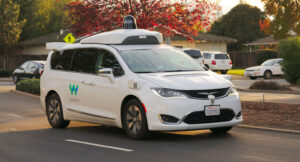
All the major car companies and suppliers test drive vehicles, each collecting data to store, process, and analyze. Find out...

Automotive storage rarely fails outright — it drifts. Learn why vehicle storage performance degrades over time, which metrics actually matter,...
Data corruption in software-defined vehicles does not always cause a crash. Why data reliability is now a strategic concern for...

Physical AI will be decided by what a machine can show about the data behind its actions. Steffan Schumacher on...
Suggested content for: